
Articles
It's So Worth It!

Life in Christ is all that he promised! Just don't stop short on your way there!
Sara and I heard it over and over again as we struggled up the trail to Hanging Lake outside Glenwood Spring, Colorado. The trail winds uphill 1,000 feet in about a little over a mile. It’s a tough climb with so little oxygen at 7,000 feet. But hikers who passed us going back down the hill kept encouraging us.
"Keep going."
"You’re getting close."
"It’s so worth it."
And it was!
Each word of encouragement lifted our spirits and lightened our steps as we traversed the rocky ground steadily climbing to the top of the cliff until we arrived at the waterfalls spilling into Hanging Lake and looked back out over the canyon we had scaled.
Learning to live relationally in an age where most of our perception of Christianity is based on religious thinking also takes even more encouragement. The writer of Hebrews says that ‘daily’ isn’t too often to help others break free from their own efforts and the distractions that so easily entangle them to discover just how awesome living daily in the Father’s love can be.
Church Is Not An Institution!
 What immediately comes to mind when you hear the word ‘church’?
If you are anything like me, a whole bag of things – some wonderful, some neutral and some unhealthy.
Unfortunately the unhealthy and negative connotations have some elements of truth to them. For instance, how often have you talked with someone who is open to following Jesus, but who is not interested in being part of a church (usually driven by their previous experiences)?
For the first Christians, church meant a Jesus-centered community on a common mission. Built around the oikos – or extended household – these were flexible, vibrant communities of faith, where Jesus was followed and glorified in the everyday realities of life. The key glue was Holy Spirit infused relationships with one another. This meant that friends, neighbors, colleagues and family could easily be folded in, as they experienced for themselves the Kingdom of God in their local context.
The problem came with the institutionalization of the church. Dynamic body-life was increasingly exchanged for (clerical) control, centralization and complacency. Jim Palmer has produced a fantastic summary list of 10 Implied Messages of Institutional Church – quick to read, far longer to transform.
Use Your Sanctified Imagination!
 A young mother chose to do her washing in the local laundromat because it was a useful meeting point for developing links with other local mothers. In her scale of values, deepening of relationships with neighbors was more important than the convenience of doing her washing at home, even though she possessed her own washing machine.
Shopping times provided natural and useful opportunities for
developing contacts with people.
In her scale of values effective evangelism was more important than efficient shopping. For her it was preferable to make her purchases from two shops even though she could have obtained all the items from one. Her approach to personal evangelism was determined by a matter of simple arithmetic. It is
better to witness to two shopkeepers than it is to one!
Do you have a sanctified imagination? How do you use it?
Dangerous Sunday- The Man Part 4

In the previous posts in this series, I suggested that it is dangerous to the spiritual maturity of believers to place an extraordinary emphasis on Sunday as “The Day” or a specific location as “The Place” or a specific set of activities as “The Program” for Christians to meet together as the church.
In this final post of the series, I want to focus on another “danger” of the modern, traditional Sunday: a focus on a specific person or group of people who must “lead” the church meeting. Usually, this person is the senior pastor, sometimes combined with other “staff” such as “minister of music” (minister or worship) or perhaps another “associate pastor.”
And, what happens when that person (the senior pastor) can’t be there – rare though that must be? He (or she) hand picks a replacement.
Dangerous Sunday- The Program(Part 3)
In the previous posts in this series, I suggested that it is dangerous to the spiritual maturity of believers to place an extraordinary emphasis on Sunday as “The Day” or a specific location as “The Place” for Christians to meet together as the church.
Besides teaching people that they are only the church on a particular day and at a particular place, the practices of modern, traditional churches also dangerously teach people that the church is only meeting when they follow a particular program. Sometimes this is called liturgy. Sometimes it’s a specific set of activities or events that must happen.
Can you imagine what would happen on Sundays among most churches if there were no songs? What if no one preached a sermon or delivered a homily? What if certain creeds or prayers were not recited in unison?
And, yet, none of these things are necessary for the church to meet. However, because most churches practice these things “religiously,” people are taught that they are necessary and if they don’t happen (sometimes in a certain order) then it is not church.
In this case, it is not the day or the place that is defining the church, but a certain set of activities. Interestingly, these activities typically have little to do with the people involved. Anyone could sing the songs or recite the creeds/prayers, and it would still be considered church. The people themselves are replaceable. The people no longer define the church; certain activities – the program – defines the church.
Dangerous Sunday- The Place (Part 2)

In a previous post in this series, I suggested that it is dangerous to the spiritual maturity of believers to place an extraordinary emphasis on Sunday as “The Day” for Christians to meet together as the church.
But there is another more dangerous emphasis that is often found among the modern, traditional church today: the place – typically a building designated for church meetings (i.e., worship services). (Of course, those who ‘house church’ could look at their particular house in the same dangerous manner.)
When I was growing up, the church building was like the temple in many ways. Oh, we SAID that our bodies were the temple of God, but we ACTED as if the church building was. There were even different levels of holiness attached to the church building.
There were things you could do/say elsewhere that you did not do/say while on church grounds. There were things you could do/say on church grounds that you did not do/say while in the church building. There were things you could do/say in the church building that you did not do/say while in “the sanctuary.” There were things you could do/say in “the sanctuary” that you did not do/say while on the platform. There were things you could do/say on the platform that you did not do/say while standing behind the pulpit.
Dangerous Sunday- The Day (Part 1)

This is the beginning of a four part series by Alan Knox noting the dangerous emphasis we can place on a certain day, a certain place, a certain program, and a certain man.
Typically, I try to write about the church from a positive perspective. Instead of writing about what’s wrong with the modern church, I usually write describing the positive characteristics and activities of the church as we see it in Scripture. Now, many of my readers automatically recognized the negative side of what I write. However, I still try to write from the positive perspective. I write about what the church should be, not what it shouldn’t be.
In this series, though, I want to write about modern, traditional church. Now, right away, there are problems with the design of this series. You see, no church will exactly look like or do the things that I write about. But, I hope that each reader will consider their own church and their own practices in order to determine if some of these aspects of the “general” modern, traditional church may apply. I think that we can all find “dangerous” practices of each of our churches.
Church Planting Movement Seminar- Victor John
 Session 1—Victor John!s Story
My family was Christian and I met Christ myself when I made a commitment to him at age 16. The CPM movement we are involved in has seen over 1.5 million people baptized. They are in over 30,000 churches. The last six years we have begun reaching out to Muslims and have seen 15 imams reached and 1,000 Muslims baptized. We are having worship services in three mosques. We see a lot of miracles. We see healings and deliverances. I have also seen people raised from the dead. About half of those who come to Christ come because of a healing or miracle. The rest come because of the influence of a friend or relative. We are now reaching out to two new people groups in the north and one in the south of India. We have a lot going on but we have a lot of help. I spend 60% of my time in India and I am now spending 40% of my time helping churches in other countries—to-date about 40 countries. I am married and have three daughters. We are currently living in Sweden where my wife is from.
Defining "Church" (Webster Has It Wrong)
 Church according to Miriam-Webster's online dictionary:
1: a building for public and especially Christian worship
2: the clergy or officialdom of a religious body
3: a body or organization of religious believers: as a: the whole body of Christians b: denomination <the Presbyterian church> c: congregation
4: a public divine worship <goes to church every Sunday>
Webster defines church according to the way this word is used today. I was taught this same definition as a little boy when I would put my hands together and recite the rhyme: "Here is the church, and here is the steeple; open the door and here are all the people."
Jesus, however, introduced the term "church" with a very different meaning in mind. He used a word "ekklesia" that simply described a group or assembly of people. This is the original definition of the word. He described "church" as those people who were following Him-people walking in allegiance to him. People. His followers. Nothing more than that.
About the Site
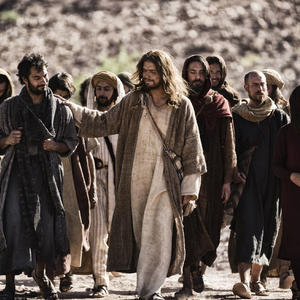
All across the world, people are gathering in small groups to serve and worship God, be family, and encourage and affect each others lives. These gatherings are called by many names including simple church, organic church, and house church. Whatever you call it, the people involved value incarnational ministry to the lost, living radically for Jesus and each other, and are willing to get rid of anything that gets in the way of being fully devoted followers of Christ.
Detailed...